
Some time ago I discussed my love of puzzles and in particular how they teach lessons for real life. I find it quite therapeutic to have this chaotic mass of disconnected bits laid out, that I know will come together into a cohesive story, if I just connect all the right shapes into the right patterns.
I recently dumped the contents of yet another cardboard puzzle out on the dining room table and started hacking away at it. Edges first, then details, then filler and glue, exactly the way I would tackle any project. What was really interesting to me this time was that I managed to get the boundary edges in place and had assembled a large part of the detail before I realized it was upside down.

Sometimes shit happens and you need to deal with it. You assemble a puzzle upside down, or you assign the wrong person to a task, or you integrate the wrong type of message engine to your new application. It happens, and when it does I try to stop for a minute and take stock of the situation, pausing to ask myself a few important questions.
– Does it matter? I mean really – maybe it will look better upside down.
– Will it be easier to finish first and THEN turn it around, or should I correct it now before it is too late?
– Is there any lesson I can learn from this to prevent the situation in the future?
You may have guessed already that those questions are just as relevant to a business project, or engineering task as they are to the cardboard puzzle. Hence this post. I run into this a great deal when pulling together projects at work where the software and the hardware and the people don’t necessarily fit together the way it sounded in the design plan.
To me, one of the most interesting historical real world puzzles is the twisted tale of the thunder lizard. This is the story of our oldest dinosaur friend, the Brontosaurus. It is a great example of what happens when you try to pull together all the bits of data you have into cohesive knowledge; when you try to assemble some useful “thing” out of the chaos of parts and pieces. The poor Brontosaurus has a place in history along side Pluto where scientists continue to discuss its validity. All the parts of the puzzle are real and most of them fit together, but this is a case where the combination of parts took a sideways turn. For a very long time, this diplodocid was the victim of ill-filling puzzle pieces.
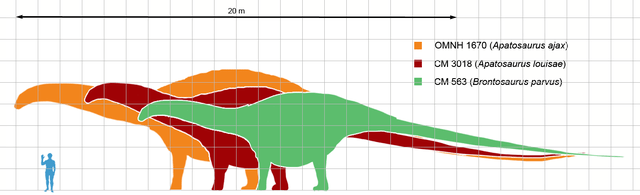
I think the important take away here is that. like a cardboard puzzle, you don’t have to get every project right the first time and it is OK if all the parts don’t fit they way you thought they should at the start of the project. Sometimes your plans go sideways, or upside down, and that is okay. Take stock of the situation, adjust your view, and rearrange the puzzle pieces as necessary to find a good outcome.
The cats in this puzzle will eventually be whole and upright and hung on a wall, but that may be a story for another day.
 The Bleeding Edge
Leave a comment