
At the risk of dating myself and inviting ageism, I’ll share with you that I am celebrating a strange anniversary. I just realized that I wrote my first useful code 42 years ago; It looked something like this:
FOR X = 1 TO 10000
LPRINT "I will not talk in class."
NEXT X
My apologies to the eighth-grade teacher who received a stack of tractor-feed printer paper on his desk the next morning.
In 1980, the Tandy TRS-80 and its BASIC programing language were my creative escape and a way to explore automation in a way that had not been available before. I know you are probably thinking this was the path to a software career, but you would be wrong. I was far more interested in the hardware, and what I could make it do in the physical world.
The programming was a piece of cake – I had mastered BASIC in only a few days and moved on to Macro Assembler (MASM) to see what I could make the processor do directly. I started and failed my first computer sales and service business in the following years.

When I moved on to college a few years later, it was for the Electronic Engineering space, not software. Getting a VAX or PDP minicomputer to do anything useful meant Assembly, COBOL, or C and frankly, waiting around for hours to get a time-slice of access on a VT-100 terminal. Running Pascal on the relatively new IBM PC’s was a little easier, but in general, writing code was a pain back then and hard wiring a circuit board was easier and more satisfying.
After graduating from college (the first time) in 1987, my tech world was largely embedded controllers, C, and Assembler. ARPANET and BBSs were the disjointed glue connecting people together, and software was still primarily only available on physical media or painfully slow downloads. In those next few years, I wrote several small utility applications with MASM, C, and Perl, but distribution and tracking were always an issue. Then the Internet was born, and 1990 was the beginning of a whole new ball game.
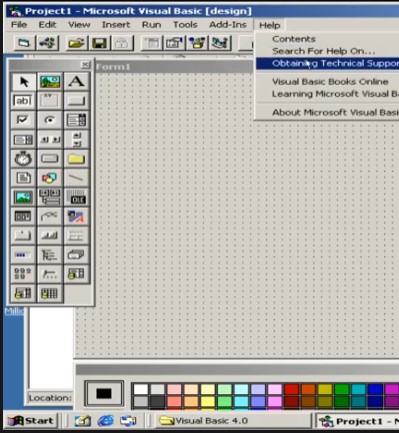
Fast forward to 1994 and the start of yet another business. I was learning to bend Visual Basic and C++ to my will, this new thing called the Internet had replaced ARPANET and the world was going crazy with the ability to build Internet-connected applications. By 1996, the rest of the world was finally realizing the Internet was a real thing as I was launching my first web application, the Aasland Office. Sadly, the masses were not yet ready for a fully remote workspace until Google tackled it nearly a decade later.
The side effect of the Aasland Office work was a number of small web applications and a very successful custom software business creating “smart websites” for savvy customers. Perl’s Common Gateway Interface (CGI) capability empowered my world (Thanks Larry) and resulted in some powerful inventory control and data search tools that paid my bills for many years.
My desire to focus on hardware and automation lead me back to school, but all the hardware needs software, so I was again deep into C, C++, C#, Assembler, PHP, Matlab, Lisp, and Java. The world had changed considerably by 2005 though and there was a constant stream of requests for “Active Pages” and web applications. The tools had matured and this concept of a “Tech Stack” was starting to take shape. I’m not sure when I first said the words LAMP STACK, but I know I had been using Linux, Apache, MySQL, Perl and PHP together for several years prior to it being a “thing”.
The work I do now at the leading edge of the digital communications frontier requires some extreme flexibility and agile thinking. Languages like Lua, Go, Rust, and NodeJS are just as likely as PHP and Python to appear in a customer deployment. There are multiple tech stacks to consider and the API revolution has introduced a whole new element of foreign system security and connectivity to consider while writing applications.
Back in 1980, when I was writing that 3 lines of Basic to annoy my teacher, I imagined a future where computers would be in every home, tiny ones would be strapped to your wrist, and embedded ones would be helping to automate daily routine tasks. But the reality of today’s integrated infrastructure has surpassed even my overly zealous imagination. As I celebrate this strange code-iversary, I am incredibly excited to watch as new tech develops, how my children adopt and adapt it to their lives and how we embed it to empower a better world.
Be awesome. Change the world.
 The Bleeding Edge
Leave a comment