
Recently, Apple and Google fixed a long-standing problem where Apple and Android users had difficulty communicating via text together. My family uses both technologies, so this was particularly painful in our house, and we celebrated the day it was fixed with bridging RCS.
Unfortunately, along with the better communication came the SPAM 😦
This post explains how my Canadian and American friends can easily report RCS spam. In other countries, there are alternate methods, as I found in this handy reddit post.
SPAM (Stupid Pointless Annoying Messages) comes in many forms and is just as relevant in phone text messages as it is in your email. A single accidental message from someone you don’t know is not typically considered SPAM, unless it was actually sent to many people, or includes a commercial offer you were not expecting. The penalties for sending these messages vary between countries, and in Canada, any form of SPAM on any electronic device is covered under CASL, Canada’s Anti-Spam Legislation. The CASL penalty for a company sending unsolicited commercial messages can be $10 million. It is meant to be a crippling penalty that can take a company out of business permanently if warranted. People who think they can skirt the issue by claiming it was an individual, personal message will be sad to find out that the penalty can still be $1 million, a potentially crippling number. In the USA, these messages are governed under the CAN-SPAM act.
Rich Communication Services (RCS) was developed as a replacement for SMS and MMS and has been in use on Android devices for some time. As of iOS-18, Apple iPhone users can also turn on RCS messaging, which solves a long-standing communication problem between Apple and Android users, particularly in group text chats. Unfortunately, there is a lack of controls over the use of RCS and it seems to be quite open to spam. I can’t fix the RCS Trust issue, but I can tell you how to report spammers who abuse it.
I received this message today on my phone. The company name has been blacked out of the message because I am sure it was not actually from them. This was sent in a group chat to 16 numbers, clearly meeting the definition of SPAM. The message originated from a number in Colombia (+57 country code) but was sent to 16 Canadian phone numbers. FWIW, I received this 3 times from 3 different Colombian numbers to different sets of Canadian numbers. In total, I counted 46 CASL violations in 15 minutes.
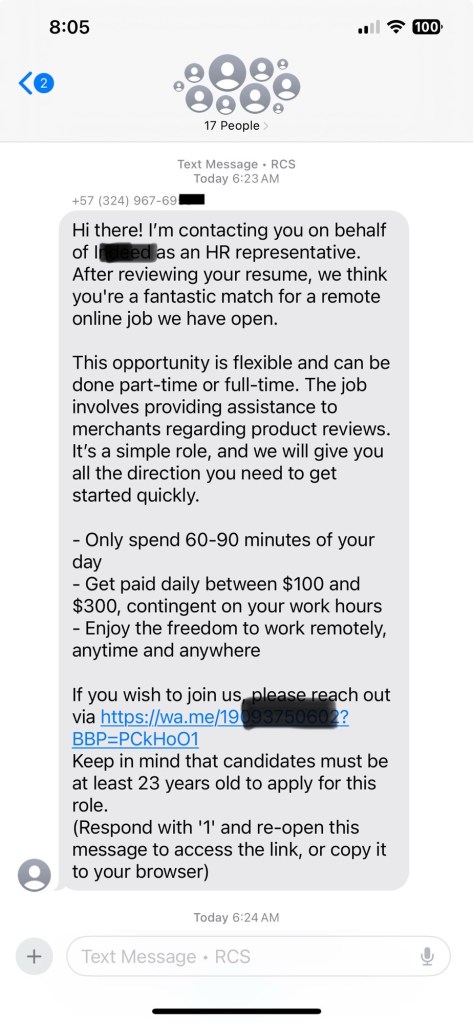
So I did what everyone should do – I reported it. In the US and Canada, you can forward these messages to #7726 and your carrier will relay those messages along with the originating number to the proper authorities. In Canada, that authority is CASL and the fine can be $10million. You could alternately use the CASL reporting form here. Forwarding a text message can be tricky, so I took a few screenshots to explain exactly how to do this on an iPhone.
First, go to the message, then press and hold the actual message bubble to get the options menu. Click “More…” and you will see a forward arrow appear at the bottom right of the screen.


Click that arrow and put 7726 in the address field and send.
Your carrier should respond, asking you to provide the phone number or email address that originated the SPAM. Be careful to only send the number of the originator, NOT any of the other victims!


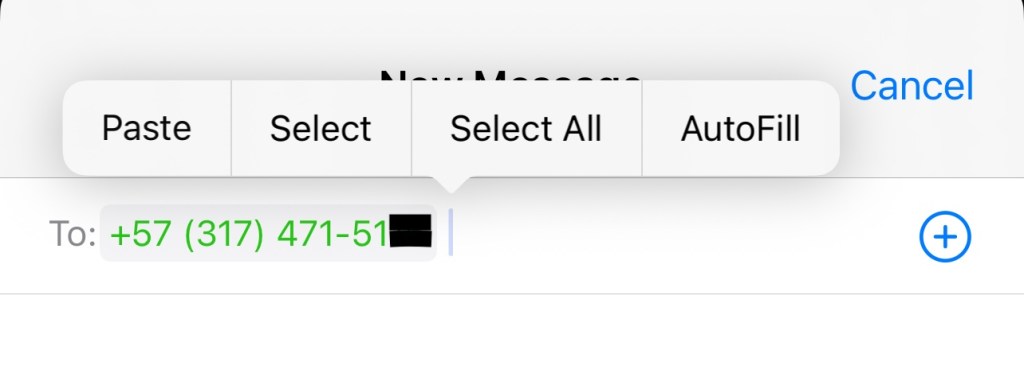
You can do this by pressing the icon of the group (the group of circles in the top left) and it will list all the numbers in the chat. The first one should be the originator.
If you click that number, it will start a new message, but DON’T send it. You can just tap once beside the number, and you should get an option to SELECT and COPY it. Then you can cancel the new message. When the carrier responds, asking for the offending number, you can just paste that into the carrier chat.
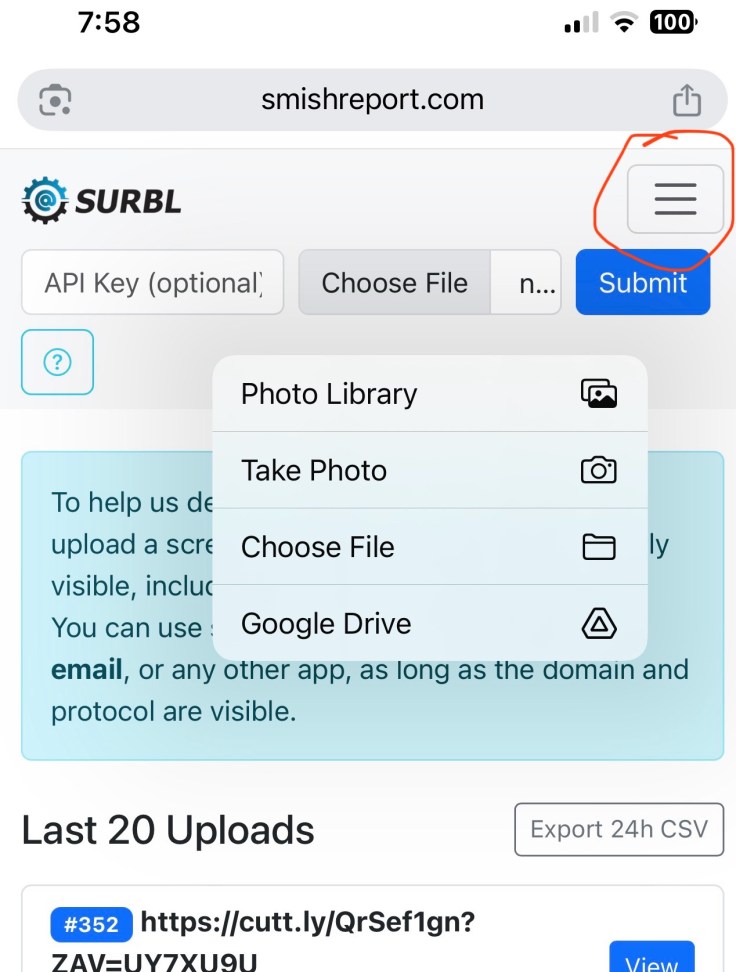
If your spam/phishing text includes a link like mine does here, my fraud-fighting friends over at SURBL would appreciate it if you helped the entire industry by sharing a screenshot of it with their “smishing” report tool. Simply take a screenshot that clearly shows the full URL ( “http : // blah.blah” ) and upload it here: https://smishreport.com/
At this point, you will likely want to leave the conversation, delete, block, and report it, etc but please do us all a favour and report these spammers. CASL actually does investigate and will indeed issue fines and penalties.
Be Awesome; Change the world.
 The Bleeding Edge
Leave a comment