
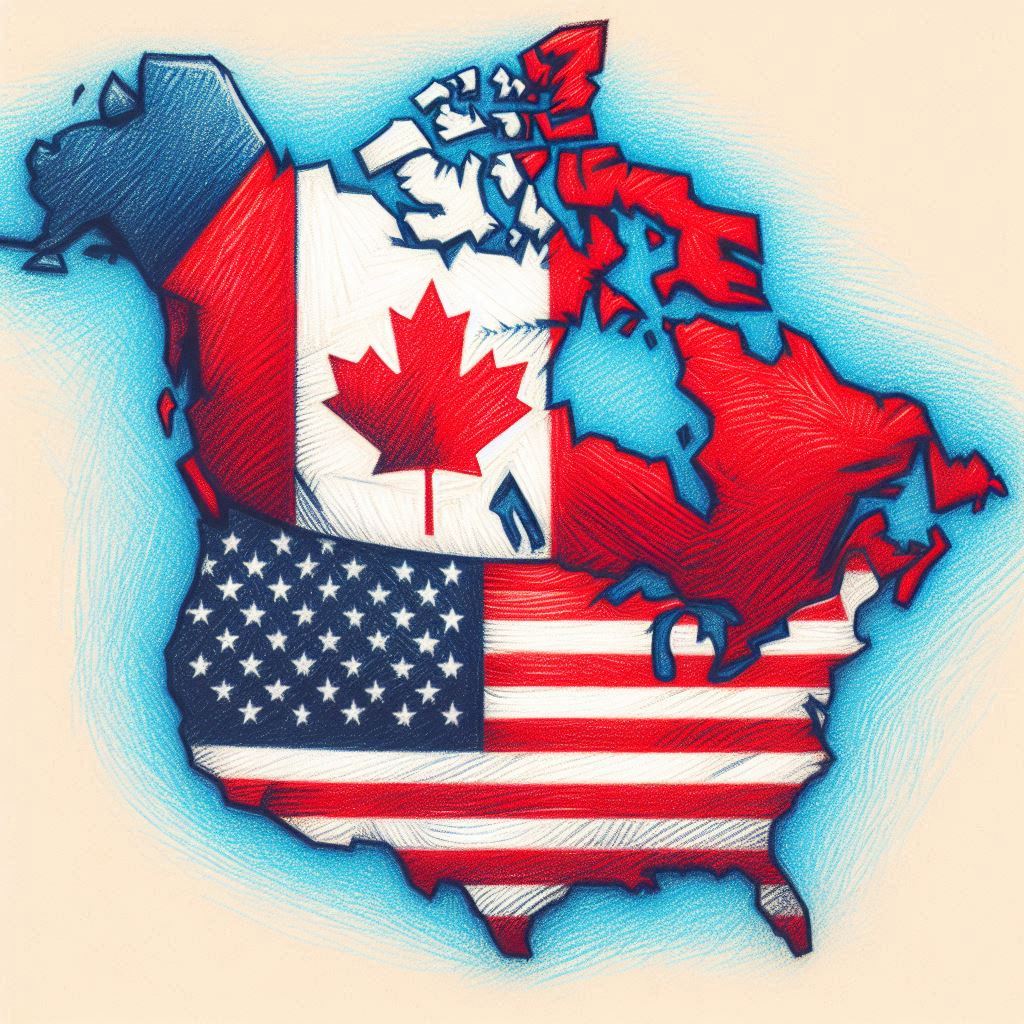
The last few weeks have been a tumultuous time in Canada. Between US tariff threats and our governing party’s internal meltdown, the country’s media outlets have had a hard time keeping up with the chaos. It is easy to see why many people have started to “circle the wagons” and shift into a protectionist mode. Frankly, I feel that is not a bad thing.
Canada has long been an open and friendly place to our neighbours near and far. As someone who has traveled extensively, I have always found that people I meet in other countries always have warm thoughts and positive comments when they hear I am Canadian. For some time, I always carried extra Canada flag lapel pins with me because people would ask for them in passing. Our welcoming global posture and history of peaceful interactions have earned us a special place in the hearts of most of the world. But that posture has also meant a lax border presence, reduced funding for security and a propensity toward oversharing. Having the largest undefended border in the world was considered by many as a benefit of the close, friendly and open relationship we have had with our closest physical neighbour. Unfortunately, when your BFF suddenly decides to instigate a trade war, those tight relationships can become a tangible problem.
It remains to be seen if Margaret Atwood’s vision of the Republic of Gilead holds any prophetic truth for our southern neighbours. I certainly hope not as many of my favourite people are American and I do fear for their safety these days. But there is not much anyone in Canada can do about that. What is critical to the people of Canada is taking a step back and rethinking how we view this relationship and how we treat each other. To paraphrase Jean Chretien, it may be time for Plan B.
I know it is hard to hear, but the painful reality is that Trump Tariffs may be the best thing to happen to Canada in a long time. We have been lacking in border security and defence spending for far too long. We have focused on North/South trade and penalized East/West trade. We have limited our own production to appease our trading partners. We have given steep discounts on resources in the name of friendly international relations. This is a wake-up call to revisit every one of those factors and re-think them. It is time for Canada to put Canada first.
Cross-border trade agreements need to be handled by the politicians and negotiating teams that own them, there is not much that individuals like you and I can do to affect those aside from speaking out, raising your voice, and letting your local representatives know how you feel. That applies just as much to the Canada/US trade situation as it does to the BC/Alberta or Quebec/Ontario border issues. Our inter-provincial trade barriers must be eliminated if we are going to get through this.
What individuals can do is focus on Canadian producers and Canadian workers. The more we as a collective can purchase Canadian goods, the less the need to export to the US and the less tariffs will affect all of our wallets. There are some obvious things like selecting things made in Canada with Canadian materials and workers. There are less obvious things like choosing to purchase goods that are largely handled by Canadian workers.

from Osoyoos, BC
Interestingly, “Buy Canadian” can be more complicated than only patronizing Canadian Companies. For instance, in the cereal industry, Canada grows and harvests the vast majority of cereal grains in North America so buying almost any cereal will benefit Canadian farmers. These grains are processed in plants in Canada and America as part of a complex international trade matrix that benefits both countries. For instance, Kellogg’s Canada employs more than 300 people in Ontario even though its parent is a US company. This kind of international trade matrix is also seen in petroleum, electricity and the cattle industry. Look for a Canadian flag on the label when buying anything.
And I think that is the key to Canadians surviving and potentially benefiting from this impending trade war. Take a few extra minutes on your shopping trip to look for that maple leaf on everything you spend money on. Double-check labels to see where things are produced. Make decisions that will benefit Canadian workers. One of the secret weapons we have in our arsenal is also one of the things that defines us as Canadians – we support each other.
Your choices matter. Choose Canada.
 The Bleeding Edge